 Christmas aside, we as humans tend to get sentimental on other occasions like birthdays, weddings, baby showers and so on. Coming to think about it, those are so many gifts to give to the many people that we love who are part of our lives. Yikes! If only the phrase "it's the thought that counts" worked in this kind of scenario. (To those of you whom have received gifts from me, I promise I gifted you with a good heart!)
But seriously, it's funny how gifts are intended to let the recipient know how the gift giver feels but in the end, the recipient may end up emotionally unstable. When you receive a gift you'll either love the gift, not like it but appreciate it or hate it. Sometimes gifts wouldn't be exactly what you wanted but may come in handy at some point. The idea of gift giving is to strengthen a relationship between two or more people but -hey-, you all know you like to treat yourselves to something once in a while too. It's a natural thing.

I come from a very big family and this Christmas I received a hell lot of gift. I was more excited than a 5 year old waking up on Christmas morning to find presents under the christmas tree, I can tell ya that! But here's the sad reality. Not all the gifts you receive will be as exciting. The cliché "ugly sweater" from your grandmother is a good example. Ruth, Otnes and Brunel (1999) based their research on the relationship establishment by gift giving and the recipient's experience when opening a gift. Reading about the concepts of the theory made me think about how cultures can be distinguished through the gift concept.
 The western culture has adapted to the idea of a gift receipt in the case that the recipient doesn't like the gift. From where I come from, it would be considered rude to exchange the gift and gift receipts were not a common thing. However, we would still establish a strong relationship with the gift giver to show appreciation that the gift giver had a good intention. This is known as the negligible effect outcome. The fact that the person still gets "points" for the effort they expend. Having a lot of people that we had a somewhat relationship with, gave us an opportunity to regift so that it wouldn't go in waste. There are other potential outcomes to the concept of gift giving. The Consumer Behaviour book by Solomon, White and Dahl in the 6th edition talks about the overkill outcome and this usually occurs in opposite sex relationships. I know guys don't feel comfortable with the idea of gift exchange because you know, men! It is difficult for us to express our emotions for the relationship we have with the other "guy" friend. Something like a dinner or buying booze is a way of expressing gift exchange. Might as well just be a teenage phase. When you give a gift that is beyond the status of the relationship you are performing what is known as overkill. You know, when you give a girl expensive jewellery when your relationship is purely platonic. This was the epitome of my younger years. Because I grew up with girls as my cousins from my father's side, I began to understand that they prefer the sensitive things like candles, chocolates, earrings and so on. And when I used to buy gifts for my girl friends, such gifts were considered too sentimental for our defined relationship. So communication may also be barrier to gift giving. That's why it would be best if you decide to give someone a gift, put some effort into learning something about them, that way you won't disappoint them and you strengthen the relationship positively. Is that so hard? In short, I believe there must be a positive linear function between the monetary value of the gift and the sentiment attached to it. Every time I purchase a gift for someone special, I would usually describe their personality. Knowing what a person is like would usually help me know what to get them. If you know me, I like competing with my social circle. So getting a gaming gift or something sporty would be the best bet! You could just purchase gift cards or give cash in an envelope. Or would you?
Define your relationship, define the occasion and see just how buying gifts would become easier. We all experience the lack of effort in buying a gift and taking the time to get the right thing would just not be an option. Interesting enough, businesses have innovated gift giving to allow consumers to spend less time looking for a gift that may or may not satisfy the recipient. Ever hear about bridal registry? Whoever thought of that is a genius! Never disappoint anyone ever again. It just makes shopping for gifts easier but that will have to compensate for the sentimental value of the gift. There's no effort in thinking about what the person will like. I guess I'm for and against the idea I guess.

 |
| "smells irresistibly" might mean he likes colognes! |
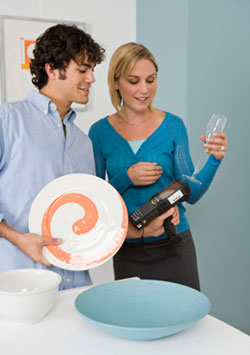 |
| Bridal Registry |
All in all, we all know how buying gifts can create so many implications. Finding the right gift, do you have to reciprocate the gesture? How do you react when you learn that someone has bought you a gift?
Who would have thought that something so simple would become something so complicated?
Watch these comedic skits about how people react to receiving gifts.
Watch these comedic skits about how people react to receiving gifts.
Sources:
1. Solomon, White, Dahl. Consumer Behaviour. 2014 Pearson Canada
2. Ruth, J., Otnes, C., & Brunel, F. (1999). Gift Receipt and the Reformation of Interpersonal Relationships.Journal of Consumer Research,
1. Solomon, White, Dahl. Consumer Behaviour. 2014 Pearson Canada
2. Ruth, J., Otnes, C., & Brunel, F. (1999). Gift Receipt and the Reformation of Interpersonal Relationships.Journal of Consumer Research,


