Tuesday, January 6, 2015

Simple yet complicated. The concept of gift giving!

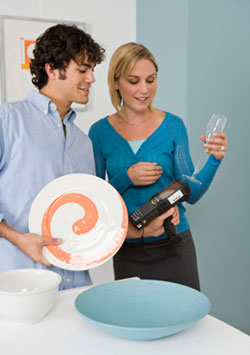
The holidays just passed and with Christmas being one of the biggest occasions where gift-giving is a ritual, some of you must have experienced happy moments, sad moments, appreciative moments and so many other emotions as you tore down the gift wrapping paper.
Christmas aside, we as humans tend to get sentimental on other occasions like birthdays, weddings, baby showers and so on. Coming to think about it, those are so many gifts to give to the many people that we love who are part of our lives. Yikes! If only the phrase "it's the thought that counts" worked in this kind of scenario. (To those of you whom have received gifts from me, I promise I gifted you with a good heart!)

But seriously, it's funny how gifts are intended to let the recipient know how the gift giver feels but in the end, the recipient may end up emotionally unstable. When you receive a gift you'll either love the gift, not like it but appreciate it or hate it. Sometimes gifts wouldn't be exactly what you wanted but may come in handy at some point. The idea of gift giving is to strengthen a relationship between two or more people but -hey-, you all know you like to treat yourselves to something once in a while too. It's a natural thing.
When I feel I have accomplished something that is rare, I treat myself to a console game or something of my interest. You know, that feeling when you feel as though you just flunked the semester and you get grade that are way better than expected. Self gifting, I would say, comes on various levels. A friend of mine loses focus when studying and would therefore gift himself a cigarette break every time he is done studying a certain amount of chapters the he sets to accomplish. I know how dangerous that could be for him but the health talk just doesn't work with him. See, something as small as that can be considered as a gift.

I come from a very big family and this Christmas I received a hell lot of gift. I was more excited than a 5 year old waking up on Christmas morning to find presents under the christmas tree, I can tell ya that! But here's the sad reality. Not all the gifts you receive will be as exciting. The cliché "ugly sweater" from your grandmother is a good example. Ruth, Otnes and Brunel (1999) based their research on the relationship establishment by gift giving and the recipient's experience when opening a gift. Reading about the concepts of the theory made me think about how cultures can be distinguished through the gift concept.
The western culture has adapted to the idea of a gift receipt in the case that the recipient doesn't like the gift. From where I come from, it would be considered rude to exchange the gift and gift receipts were not a common thing. However, we would still establish a strong relationship with the gift giver to show appreciation that the gift giver had a good intention. This is known as the negligible effect outcome. The fact that the person still gets "points" for the effort they expend. Having a lot of people that we had a somewhat relationship with, gave us an opportunity to regift so that it wouldn't go in waste. There are other potential outcomes to the concept of gift giving. The Consumer Behaviour book by Solomon, White and Dahl in the 6th edition talks about the overkill outcome and this usually occurs in opposite sex relationships. I know guys don't feel comfortable with the idea of gift exchange because you know, men! It is difficult for us to express our emotions for the relationship we have with the other "guy" friend. Something like a dinner or buying booze is a way of expressing gift exchange. Might as well just be a teenage phase. When you give a gift that is beyond the status of the relationship you are performing what is known as overkill. You know, when you give a girl expensive jewellery when your relationship is purely platonic. This was the epitome of my younger years. Because I grew up with girls as my cousins from my father's side, I began to understand that they prefer the sensitive things like candles, chocolates, earrings and so on. And when I used to buy gifts for my girl friends, such gifts were considered too sentimental for our defined relationship. So communication may also be barrier to gift giving. That's why it would be best if you decide to give someone a gift, put some effort into learning something about them, that way you won't disappoint them and you strengthen the relationship positively. Is that so hard? In short, I believe there must be a positive linear function between the monetary value of the gift and the sentiment attached to it. Every time I purchase a gift for someone special, I would usually describe their personality. Knowing what a person is like would usually help me know what to get them. If you know me, I like competing with my social circle. So getting a gaming gift or something sporty would be the best bet! You could just purchase gift cards or give cash in an envelope. Or would you?

"smells irresistibly" might mean he likes colognes!

Bridal Registry
Define your relationship, define the occasion and see just how buying gifts would become easier. We all experience the lack of effort in buying a gift and taking the time to get the right thing would just not be an option. Interesting enough, businesses have innovated gift giving to allow consumers to spend less time looking for a gift that may or may not satisfy the recipient. Ever hear about bridal registry? Whoever thought of that is a genius! Never disappoint anyone ever again. It just makes shopping for gifts easier but that will have to compensate for the sentimental value of the gift. There's no effort in thinking about what the person will like. I guess I'm for and against the idea I guess. 

All in all, we all know how buying gifts can create so many implications. Finding the right gift, do you have to reciprocate the gesture? How do you react when you learn that someone has bought you a gift? 
Who would have thought that something so simple would become something so complicated?

Watch these comedic skits about how people react to receiving gifts.


Sources:
1. Solomon, White, Dahl. Consumer Behaviour. 2014 Pearson Canada
2. Ruth, J., Otnes, C., & Brunel, F. (1999). Gift Receipt and the Reformation of Interpersonal Relationships.Journal of Consumer Research


Sunday, January 4, 2015

Make your mind up!

Ever have difficulties making a purchase decision?

Entertainment is something that has played a major role throughout my 21 years on planet earth. Coming from a family of boys, winning expresses your superiority and the best way to compete would be through gaming or playing sports. 
The testosterone levels would be overflowing through screaming at each other and putting each other down for losing a game. Nothing is better than a bunch of boys bonding over a session of games and ordering some food. But soon enough one thing came missing, the new PlayStation 4 Gaming System. We knew we had to get it but there was only one problem, a problem that electronic businesses usually undergo; competition! The Xbox 1 was just released earlier than that and both the systems delivered outstanding features, which made it an impossible decision to make. Which one to get? Making decisions is often difficult and there are various factors to consider. The idea of upbringing alternate gaming systems was something new to us and we didn't know how to approach the situation.


I realised that we had some sort of information about both systems but we had to perform an external search to help us decide what to get. Friends had different opinions, reviewers brought up solid point about the system of their preference and the more information we got, the more confusing it became. We went on searching for more information online and used the comparing platform to see the differences in the two gaming systems. 
We always purchased the Playstation rather than the Xbox and brand switching was questionable due to the competitive features the two brands delivered. Usually we would experience loss aversion where we would consider the loss over the gain but the upgrade created a whole other dilemma; both systems had good features. We approached a few people and they recommended extended problem solving by discussing the dilemma with the employee at the store who is much more educated about both systems. The worst we would face is functional risk and after evaluating the opportunity cost, the decision we were going to make because much clear.

The Playstation 4 was positioned according to our price range and delivered the quality of graphics we desired. The ability to play online was more viable in the Playstation as we already had a set account with a certain amount of points. Buying a whole other system would require the consumer to learn the new operations and be introduced to new features that were designed differently by the competitor brand. The rational decision to make was to continue using the Playstation and form a loyalty towards their operating system. I think because the decision to be made was not habitual, it required us as the consumer to perform a search about the two products. I learned about something known as consumer inertia. It just means to choose a specific brand out of mere habit as it requires less effort. Now I understand that consoles are not a product that is purchased based on habitual factors but since so many generations of consoles from the same brand are released, you tend to stick to the brand because it is the one you are adapted to. Would this decision of Playstation 4 over Xbox 1 be a factor of consumer inertia? To a certain extent, yes!


I understood that the level of involvement when making a decision increases as the price increases and because we are cautious when it comes to luxury products, we needed to ensure that we don’t regret the decision.


Consumers make decisions every day when buying a soft drink to buying lunch and even groceries. The fact that new brands are established every now and then, our ability to make a decision becomes more complex and we are required to perform extended search even if we have little information about the product.
The more something means to us, the longer it takes to make a decision after you have recognised a need for it and evaluating alternatives would impact our decision to buy the product. Buying a gaming system made me realise the amount of information we need and the factors we need to consider when making a purchase decision. Click on the video below to know how we are influenced by various decision attributes. Putting the idea of decision making processes in a real life situation might intrigue you how we make certain decisions. 


Lets run through this decision making process that I had to undergo:
Problem recognition: Two new gaming system was released with improved graphics, speed and new games would be launched with additional features.
Information search: Spoke to educated employees, friends, internet search and gaming reviewers.
Evaluation of alternatives: Playstation 4 or Xbox 1
Product choice: Playstation 4 because I recognise the operating system, I have been a loyal customer, cheaper online play than Xbox, existing purchased playstation 3 games would function on the next generation model.
Consumption and Learning: With the Xbox I could have used the additional camera feature to play multiplayer games while the Playstation cannot perform such function and this was a compensatory decision rule I had to make. The new gaming system was fun and easy to play with and I enjoyed it.

If you perform such a decision making process, it will definitely guide you towards something you desire but are not aware because of the alternatives available. Next time you purchase something significant, see how effective this procedure is in helping you decide what YOU want!


Thursday, December 25, 2014

Happy Holidays!

My fellow readers,

That means you better have gone to buy presents yourselves! That's what consumerism is all about, isn't it? Nah, but seriously...

I would like to wish you all a Merry Christmas and a Happy New Year!


Monday, December 15, 2014

Your attitude changes everything!

Welcome again!

I hope you, my readers, had a great holiday and are set to start a new beginning as you plan to accomplish your new goals this 2015.

I’m sure many of us were enticed by the media advertising that influenced our shopping behaviour through Christmas, Boxing Day and New Year sales. Prices you just can’t say no to! 
Imagine the time taken to plan marketing strategies for the holiday in pursuit of beating competition through floor prices and not with the intent of increasing market share. 
In the long run, yes, the prices do affect loyalty, which will impact the market share but because people are in a holiday mood, businesses would leverage consumers’ ability to spend. I mean, why not make money during the season where everyone is out looking for something to gift his or her beloved one? Why not let shopaholics enjoy their demand for various products? Holidays are when consumers are most vulnerable and impulse purchase as well.  Sounds ridiculous that businesses are trying to take advantage of consumers but its true! I mean, look at this and tell me if you don't think people go crazy during Boxing Day!


Think about it. How many purchases did you make this Christmas? The answer is obviously going to be different for each and every one of you because of one major factor: attitude.
We all form different attitudes about various products and we have our reasons for it but at the same time, people can form the same attitude about a certain product and have a different reason for forming that attitude. Every consumer is unique and diverse in their own way and therefore forms tastes and preferences to specific products over competitive brands. I, for example, have purchased Apple products for years and have upgraded the iPhone every two years because of the features and accessibility it offers me as a customer. That would generally make me a loyal consumer, as I believe no other brand can provide such quality and I feel that the features of the products accommodate my needs from cloud sharing to synchronising and even software design. My roommate on the other hand has formed a stronger attitude where he believes that new versions of the device create a significant impact and because of his passion for the brand, he would literally line up the day before to pick his new gadget. I wondered why someone would be that crazy to literally get out of bed early to go and line up. Like, are you serious? So I asked my roommate and he said that the services the company offers are unique and flexible enough to allow strong users to get their problem resolved in no time.

Yeah, yeah! I know I’m ranting about how awesome Apple is and all you Android users are aggravated. But it’s just how I feel about the brand. Something I found quite interesting is that people I know who have never used an Apple product just don’t like Apple and their users because of the attitude and loyalty they form towards a specific brand. I learnt about how there are hierarchies when making a purchase-decision using attitude as a factor. It consists of Affect (how you feel about an attitude object), Behaviour (the person’s intention of the attitude object) and Cognition (beliefs of an attitude object). Now when I purchased the iPhone 6, I had already developed the belief that the phone was reliable and suited my needs and therefore made a purchase decision. But when I already bought the phone and began using it, I realised that the iPhone 6Plus was more ideal than the iPhone 6 itself and this affected that way I felt towards the specific phone. Some can agree with me and others have a different opinion. New users however, could buy the product (behaviour) and then when they use the phone, they will form an opinion about how they feel about the product (affect) and then form an attitude towards the product by expressing their beliefs about their experience (cognition). There are several ways in which people could form an attitude towards something and they will have their reason for it.


Advertising also helps us form an attitude towards a product; good or bad. We often judge the aesthetics of a product then form an attitude. Its funny how the mind plays with us. Say if I hadn’t formed a bad attitude towards the iPhone 6Plus and if I hadn’t been excited to purchase the iPhone 6, I wouldn’t have experienced what businesses call post-purchase dissonance. Making a decision after learning about the product rather than focusing on aesthetics, I would’ve made a totally different product choice. The social environment around me that is my friends also had a significant influence in my attitude towards the iPhone 6 Plus. It’s funny how so many other factors can change your attitude towards a product and consumers are influenced everyday through experience, their social circles, the internet and even the television.

What are the attitude commitments?
The highest level is Internalisation: the fact that I choose only to buy an iPhone and no other phone ever shows my commitment to the product and that my attitude is positively responsive to Apple products only.
The mid level is Identification: The first time the iPhone ever came out in 2007, it was the first fully integrated touch screen phone and I purchased it to conform to my group of friends. That is the attitude I had earlier.
The lowest level is Compliance: Attitude here is based on punishment or rewards. I would go to Psychology class even though I hated it because I got bonus marks for attendance.

Every product that you buy, I believe has a different level of attitude based on the level of involvement and interest. 

Have you ever changed your attitude towards something that was important to you?


Thursday, November 20, 2014

You are more beautiful than you think!

Hello beautiful!

How do we perceive ourselves? Do we judge ourselves too harshly? Ever heard of the phrase "Beauty is in the eye of the beholder"?

Everyday, when we look in the mirror, we remind ourselves of who we are. Each and every one of us so unique in its own distinctive measure. I'd like to ask you readers, that when you walk out of the house, look at the people around you. Think about how each person is living a different life, undergoing different circumstances in pursuit to survive the real world.

Today, I walked out and decided to ask a couple of people if they were free to answer just a few questions.
1. Where are you from?
2. If you were to describe yourself, what would it be and why?
3. What is the most important thing to you?

I pulled out my iPhone and asked them:
4. What do you think of this product?

Each person gave a different answer and had a different perspective of looking at things. It made me think about how people of different cultures approach things in a certain way. It is understood from the Consumer Behaviour book by Solomon, White and Dahl in the Sixth edition, that Western cultures focus on the unique self while Eastern cultures focus on the collective self. I find this to be true because even though I am from Kenya, I was raised from a culture followed from the east because of my Indian ethnicity and we were brought up in a manner that required us to perform actions collectively. Upon coming to Canada, I have learned the Western way by doing things individually without having to form an approval from my social circle. So when I spoke to people with different opinions, it suddenly struck me. Organisations set objectives and implement strategies to deliver their product to a diverse group of people and this can be quite difficult. The research and development department look into the target market's personality and see how they identify their self. What people desire from a product, I believe, is what identifies who the person is and hence the name of the blog, You Are What You Consume. It primarily explains that the decisions we make and the things we choose to purchase identify who we are as consumers and the image we project to others.

Piercings, tattoos, the kind of products we buy, the colour of the product, the price, the way we dress, the sports team we follow, all these are attributes that determine our personality and the way we look at ourself. But how do people perceive you as? We tend to judge people with the things that are associated with them rather than looking at their inner self.
One of the people I interviewed had a tattoo on his neck and dressed in a manner that would otherwise be inappropriate to the society. But when he told me his story, I would have never thought that this was the same person as the outer person (his appearance). The fact that the man was struggling to finance his daughter's education and how his family abandoned him because of the choices he made to express who he is through body art was quite saddening. Having to listen to someone portraying himself of who he really is and society rejecting this personality by judging his appearance really opened my eyes. That's when the phrase "don't judge a book by its cover" really applied to me.


Dove specialise in cosmetics and deliver beauty care products to their customers. They executed a campaign earlier to emphasise how we tend to misinterpret who we are. The successful campaign lead to one of the highest views on youtube ever and when I saw this video, it made me realise how harsh we can be to judge ourselves let alone others judging us. It makes me question, is beauty really in the eyes of the beholder? The campaign was about a forensic artist who asked women (the target group) to describe themselves and the contrast of what they thought they looked like and what they actually looked like was unbelievable. "Dove began the first Campaign for Real Beauty in 2004, after conducting a survey that showed only two percent of women worldwide would describe themselves as beautiful.
In the two drawings are shown side-by-side, the contrast is stark - and the women seem stunned. 
'She looks closed off and fatter. Sadder too,' said one woman when asked to describe the two sketches. 'The other one looks more open, friendly and happy.'"

Take a look.


This campaign impacted my significantly because when I tried the experiment by describing myself, and instead of having my roommate to draw mw, I told him to describe my features and the descriptions were quite different. I didn't recognise the features I had until it was pointed out to me. It made me question myself as a consumer. I had purchased a lotion that would make my skin softer because I thought my palms were rough. But when I was told I had soft hands already I was brought to surprise! My ideal self was actually my actual self to a certain extent. I also realised that I gave a different impression to others than I thought I did. Because of the fact that I stutter, I though I came across as nervous and slow speaker but then again it was brought to me that I don't seem nervous and only stutter rarely. Because I was aware of my stutter problem, I was not confident about the way I speak. It's funny to learn something about yourself that you didn't know even after living so many years and understanding who I really was.
Look at yourself in the mirror and ask yourself who you are. Now ask a friend to describe you and see how close the two descriptions are. How well do you know yourself? Look around your room and see the kinds of things you have purchased. Do they relate to your personality and who you think you are?

All I'm saying is, don't judge yourself too harshly and learn about yourself. You'll always notice something new about yourself. Identify your identity!!

Sources:
1. Solomon, White, Dahl. Consumer Behaviour. 2014 Pearson Canada
2. Townsend, C. (2013, April 18). You ARE more beautiful than you think: Dove hires FBI-trained forensic artist to prove women judge their appearance more harshly than strangers. Retrieved from http://www.dailymail.co.uk/femail/article-2309984/You-ARE-beautiful-think--Dove-uses-FBI-trained-forensic-artist-prove-women-judge-appearance-harshly-strangers.html

Thursday, November 6, 2014

State of mind

Missed me? Good, because today we are going to discuss how advertising strategies affect our memory and state of mind.

So I wake up today and the first thing I do is reach out for my glasses, put them on and grab my phone from under the pillow which I place out of habit because I tend to sleep through my alarms. As I scroll through the BBC news app, I realise that today I'm free as a bird! No class to worry about, no work to do and no grocery shopping to think about. I then wash up and head straight for the TV remote.


As I watch a series of shows, I come across various commercials some of which are inexplicable! I mean why would businesses spend hundreds and thousands of dollars on advertising without getting the message across well. I begin playing on my phone and no sooner do I hear a catchy song playing on TV. Who would have thought it was a bread commercial? If you don't believe me, watch it for yourself in the video below.


In the book Consumer Behaviour by Solomon, White and Dahl, the author explains how consumers respond to brand names, scents and jingles on the basis of learned associations over time.

Believe it or not, the song was engraved in the back of my head! Every time I'm out getting groceries, the song is playing in my head when I reach the bread section "1,2,3,4,5 and 6 and 7...". Because this song is associated with the Dempsters brand and the lyrics contain diction that relate to my needs, I feel motivated to choose it over the varieties of other bread available. The repetition in the tune and lyrics create a sort of learning activity to the memory thus giving more exposure to the brand. No one even had to come and push me to choose Dempsters specifically but the psychological effect communicates to the conscious mind about the product and before you know it, I was convinced enough that Dempsters will satisfy my needs. I believe the implementation of this jingle was a form of classical conditioning as every time I sang the jingle, it would make me feel hungry for the foods I like with this brand of bread. Singing about food like making quinoa would trigger my belly to start making obnoxious grumbling sounds and that's when I noticed how this advertising strategy affected my mind and memory.

There are other techniques used in triggering the memory to remember a brand's identity. The book of Consumer Behaviour defines Instrumental conditioning by explaining that individuals will learn to perform behaviours that produce positive outcomes and will avoid those that produce negative outcomes. This is a form of operant conditioning where our psychological thought processing adapts to performing actions that would result in a positive outcome and this is one method in which our memory is influenced. We, as consumers, react when something results in a positive outcome as we consider our happiness and satisfaction over anything. Take a look at Penny in the show Big Bang Theory and see how she is unconsciously being manipulated by Sheldon by being awarded with a treat every time she does something right. Something that you will not notice is that the stimuli is paired with time. The clip doesn't show how long it took Penny to be conditioned to operate with chocolate but rationally speaking, it would take time for one to be influenced using instruments.


Similarly, businesses condition us to react in a certain manner by introducing rewards because incentives enable us to do what will result in a positive outcome. Shoppers have their reward program, Scotiabank have free movies that you earn as you make purchases with their card and Subway offer free cookies if you complete their survey. So not only do they encourage you to spend more but they also use incentives to generate feedback from their customers. 


Sometimes when I have time on my hand, I would actually complete the survey cause I get a cookie to add to my meal. The fact that I am aware of the rewards available to me, it means that these incentives serve to store in my long term memory. Sometimes we are unaware of how we are conditioned and I believe it is vital for us as consumers to be conscious about these strategies and behave accordingly.


Analogy cues are used widely in advertising to help consumers understand the product's concept. Many at times the analogy remains in the memory and depending on the degree of accuracy of the two items, it will be stored in the short-term memory or long-term memory. A commercial was released in Kenya regarding the durability of a condom brand and the technique in which it is advertised helps the consumer believe in the product. I discussed this commercial with a few other people and the response I got was that they use that specific brand because of the way the company gives the consumer the confidence in the functionality. Take a look at the video below. Excuse the quality of the video, it was released quite a while ago.


The strength of the umbrella cover is compared to the condom itself thus giving the consumer the idea that they can trust the product's strength. It's amazing how creative companies can be to create a brand awareness and create brand loyalty in just 1minute. The humour in this commercial and the analogy would definitely create an impact on one's memory response as it did to the friends I spoke to earlier and through frequency marketing, the brand sticks within your memory to enable future purchases. Oh the wonders of advertising!


Watch out for another blog soon!


Sources:
Consumer Behaviour, Solomon,White,Dahl. Sixth Canadian Edition. 2014 Pearson Canada.